


What's the difference between articulation and phonology?
Before getting into the actual mechanics behind speech sounds, a quick word about the difference between articulation and phonology is important.
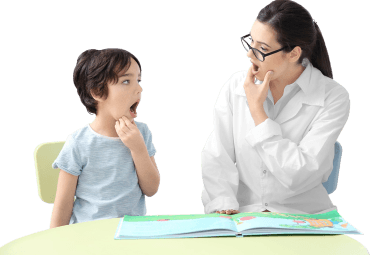
Articulation is the production of individual speech sounds in syllables, words, and sentences. It's the thing you probably think about when you think about a speech therapist-- articulation therapy involves working with children to more accurately produce a specific speech sound such as "s", "l", or "r".
Phonology, however, refers to the patterns of errors children typically make when developing speech sounds. You can read more about these patterns by reading this post. Often, when children are young, we work less on specific speech sounds and more on the patterns behind the errors they are making. For example, many young children will leave the final consonant off of all their words-- no matter what the consonant is. So we work on helping them learn to produce a variety of consonants on the end of words, rather than focusing on one specific speech sound in particular. When we are using a phonology approach to treating speech sound disorders, we focus less on the mechanics and more on the patterns. The distinction between phonology disorders and articulation disorders is important, because they are treated differently.Articulation is the production of individual speech sounds in syllables, words, and sentences. It's the thing you probably think about when you think about a speech therapist-- articulation therapy involves working with children to more accurately produce a specific speech sound such as "s", "l", or "r".
How do you help children produce speech sounds?
Having said all that, there is certainly a place for knowing how speech sounds are made, especially if your child is having difficulty producing once specific speech sound. It goes without saying that the best way to help your child is to seek out a great speech-language therapist to help you and your child figure out what sounds should be worked on and how to work on them. There is much more to speech-language therapy than could ever be contained in one blog, much less one blog post. However, accessing speech-language therapy isn't always possible, and some parents simply want to try working on speech sounds on their own first. With that in mind, here are some tips and tricks for helping children produce speech sounds. Some speech sounds are highly visible and relatively easy to teach. For example:
- The sounds /m/, /p/ and /b/ are all made by putting your lips together. You can generally show children these sounds and ask children to imitate you, and they will.
- The sounds /n/, /t/, and /d/ are made by placing your tongue tip just behind your upper front teeth. Sometimes children need a bit of help getting their tongue in that precise spot, but once you show them this, they can imitate the sound.
- The sounds /f/ and /v/ are made by placing your upper teeth on your bottom lip and either blowing (for /f/) or vibrating/humming (for /v/).
Want to learn more about speech sounds and kids?
0 comments:
Post a Comment